

If you build systems in Southeast Asia, this will sound familiar. Your software platform is ready. The project is signed. And then you hit the last mile — you cannot find a smart terminal that actually fits.
Go to a large manufacturer and the minimum order starts at a few thousand units. Go to a small workshop and you are gambling on both lead time and quality.
It does not have to be a gamble. Six well-aimed questions, asked before you commit, will filter out most of the wrong suppliers.
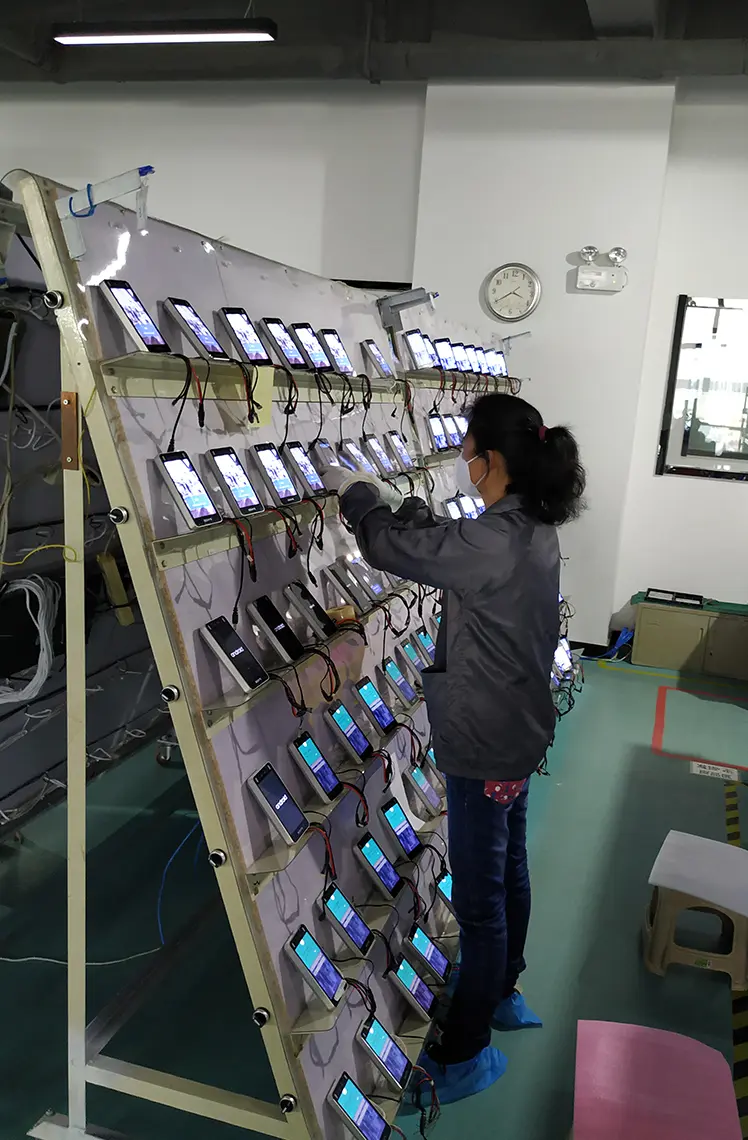
Question 1: Are you a source factory or a trading company?
This one determines your price and your response speed. A real source factory owns its own facility, production lines and engineering team — which means it can modify a mould, revise a board or rewrite firmware without waiting on someone else.
How to verify it: ask for a live video walkthrough of the production floor and the reliability lab. A factory can do that in ten minutes. A trading company cannot.
Question 2: What is your MOQ, and can I start with a small trial order?
If your first order is a few hundred units and the supplier opens at three thousand, the conversation is already over.
Suppliers who genuinely support small trial runs usually have two things behind them: a mature supply chain and core boards produced in advance. That is what lets them take a small order without losing money on it.
Question 3: How is the lead time calculated — and what happens if it slips?
Lead time is not a verbal promise. It is a function of production scheduling.
Here is a question that cuts through the sales talk: ask for the order date and shipping date of a recent, real project. A supplier who can produce that record has a delivery rhythm you can plan around. One who cannot is guessing.
Question 4: Do you provide an SDK/API — and is your interface standard or rewritten each time?
Integration is where hidden costs live. A mature manufacturer maintains standardized interface documentation you can work against directly. A supplier that reinvents the protocol for every project will cost you months in maintenance later.
Then ask one more thing: do your engineers join the integration testing?
Question 5: What reliability testing does a unit pass before it ships?
At minimum: high/low-temperature aging, transportation vibration, and electrostatic discharge.
For Southeast Asia, push one step further and ask specifically about stability under high heat and humidity. It is one of the most common causes of early field failure in the region — and one of the most commonly skipped tests.
Question 6: How does after-sales support work — and who do I contact across time zones?
This is the question most buyers forget, and the one that hurts most later. When something breaks after go-live, whether you can reach an engineer within hours directly shapes how professional you look in front of your own client.
For Southeast Asian buyers, working with a Chinese manufacturer actually carries a structural advantage here: the time difference is around one hour. Your working hours overlap almost completely. When you are standing in front of a customer with a problem, support is effectively real-time — not a message that gets answered tomorrow.
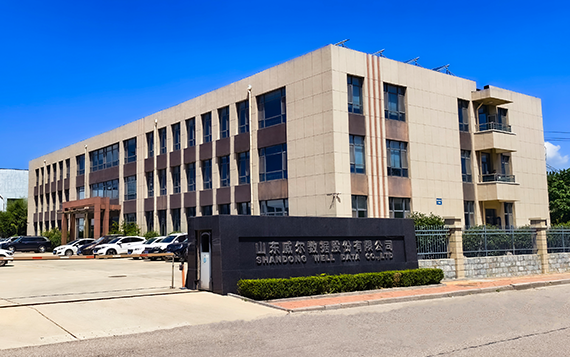
About Us
Shandong Well Data Co., Ltd. (WEDS) was founded in 1997 and listed on the NEEQ in 2015 (stock code 833552).
For nearly 30 years we have focused on the R&D and manufacturing of intelligent identification terminals. Today we hold 66 patents and 39 software copyrights, operate a 9,000 m² manufacturing park, and employ more than 160 people. Our products are exported to over 90 countries and regions, and are in use at companies including Haier and BYD.
We support small-batch, customized and fast-delivery orders, provide standard API/SDK with hands-on engineering support for integration, and now serve Southeast Asia with a full-process service covering product design, manufacturing and customs clearance.
If you have a project in motion, get in touch. We will start by evaluating your scenario and giving you a straight answer on what is feasible.